
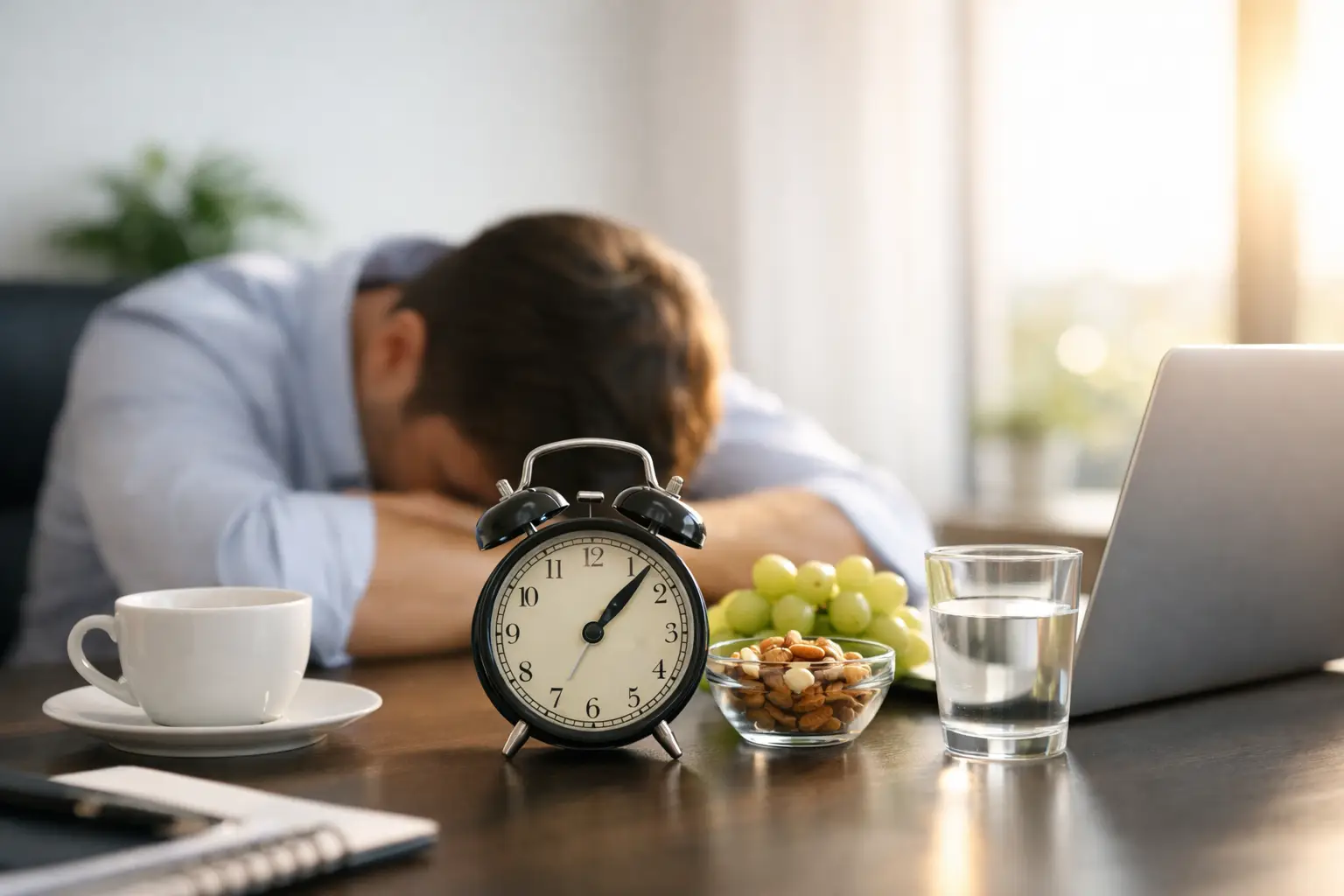
At 2:30 p.m. a second coffee can feel like the only way to finish the day, but learning how to avoid afternoon energy crashes usually starts earlier: with the breakfast you rushed, the lunch that spiked your blood sugar, the water you forgot to drink or the sleep debt that has been building all week.
That midafternoon slump is common, and it is not a character flaw or proof that you need more willpower. Your body naturally experiences a dip in alertness in the early afternoon. The problem is when that normal dip becomes heavy eyelids, intense sugar cravings, brain fog, irritability or a level of fatigue that makes work, errands, or a workout feel impossible.
The goal is not to feel artificially wired all day, it’s to create steadier energy through food, movement, sleep, and a few well-timed choices that work with your biology.
Why afternoon energy crashes happen
Your internal clock plays a role. Most people have a mild decline in alertness after midday, even after a good night of sleep.1 A large or fast-digesting lunch can amplify it, especially when it is built around refined carbohydrates such as white bread, chips, pastries, sweet drinks, or a big serving of pasta without enough protein or fiber.
Those foods can raise blood sugar quickly. Your body responds with insulin, and the resulting drop in circulating blood sugar can leave you tired, hungry, shaky or searching for another snack. This does not mean carbohydrates are the enemy, whole-food carbs, including fruit, beans, oats, quinoa, potatoes, and brown rice, can support sustained energy when paired with protein, healthy fat, and fiber.
Sleep matters just as much, caffeine may conceal fatigue for a few hours, but it cannot replace restorative sleep. If you regularly wake unrefreshed, snore loudly, wake with headaches or feel sleepy enough to doze off during the day, the afternoon crash may be a signal to look beyond lunch.
Dehydration, a sedentary day, alcohol the night before, certain medications, and high stress can also drain energy. For adults over 50, persistent fatigue may sometimes relate to conditions such as anemia, thyroid disease, sleep apnea, diabetes, depression or nutrient deficiencies.
How to avoid afternoon energy crashes with better meals
A steady afternoon often begins with a breakfast that contains more than coffee and a muffin. If you eat breakfast, aim for a meaningful source of protein plus fiber. Eggs with vegetables and whole-grain toast, plain Greek yogurt with berries and nuts, or oatmeal topped with chia seeds and nut butter are simple examples.2
Some people genuinely prefer a later first meal or follow a fasting routine, this can work if it suits their health needs and daily schedule. The trade-off is that waiting too long and then eating a large, low-fiber lunch can make the post-meal slump more likely. Notice how your own eating window affects focus, mood, and workout recovery rather than assuming one schedule works for everyone.
Build a lunch that releases energy more gradually
Try using a simple plate framework: include a palm-sized serving of protein, plenty of nonstarchy vegetables, a high-fiber carbohydrate, and a source of satisfying fat. Think salmon, roasted vegetables, lentils, and olive oil; or a chicken and avocado salad with beans and a piece of fruit.3
Protein is especially useful because it supports fullness and helps slow the effect of carbohydrates on blood sugar. Fiber does something similar while supporting digestive health.4 Healthy fats from foods such as olive oil, nuts, seeds, avocado, and fatty fish help a meal feel satisfying, although very high-fat meals can make some people feel sluggish. Portion and personal tolerance matter.
Restaurant lunches can be tricky because they often combine oversized portions, refined starches, sugary sauces, and little produce. You do not need a perfect order, a practical move is to choose a protein-forward main dish, add vegetables, and save half of a heavy side for later. If you want dessert, enjoy it after a balanced meal rather than making it your lunch.
Treat the 3 p.m. snack as a tool, not a rescue mission
A planned, balanced snack can be a practical way to avoid arriving at your next meal extremely hungry. Pair a carbohydrate with protein or fat: an apple with peanut butter, carrots with hummus, cottage cheese with berries, or a small handful of nuts with fruit.
Try not to make candy, energy drinks, or sweet coffee beverages your regular afternoon solution. They may provide a quick lift, but they can keep the cycle of spikes, crashes, and late-day cravings going. Ingredient transparency matters here. Many products marketed for “clean energy” still contain added sugars, large caffeine doses, or blends that make it hard to tell what you are getting.
Use caffeine strategically, not continuously
Coffee and tea can be part of a healthy routine for many adults. The issue is timing and dose. Using caffeine to push through a crash late in the day can interfere with nighttime sleep, setting up another tired afternoon tomorrow.5
A useful starting point is to have caffeine earlier in the day and avoid substantial caffeine for at least six hours before bedtime.6 If you’re particularly sensitive to caffeine, an earlier cutoff may work better. Decaf coffee, herbal tea, sparkling water or a short walk, can become a more sleep-friendly afternoon ritual.
Also look at the total dose. A large cold brew, pre-workout powder and energy drink can add up quickly. More stimulant is not always more energy. Jitters, a racing heart, digestive upset, and poor sleep are signs your strategy needs adjusting.
Move before the slump gets heavy
When energy drops, sitting still can make it feel worse. You do not need a full gym session to reset your brain and circulation. Ten minutes of brisk walking after lunch, a few flights of stairs, light mobility work, or a brief walk outside can improve alertness7 without leaving you sweaty at your desk.
Daylight adds another benefit. Exposure to natural light helps reinforce your body clock, which can support better sleep later. If an outdoor walk is not realistic, stand up at least once an hour, stretch your hips and upper back, or take calls while walking.
For people who exercise after work, a small balanced snack one to two hours before training may help more than an extra coffee. A banana with Greek yogurt or toast with eggs can provide usable fuel without the heavy feeling of a large meal.
Check the less obvious energy drains
Hydration is an easy one to overlook. Mild dehydration can contribute to headache, poor concentration, and fatigue.8 Keep water visible, drink with meals, and adjust your intake for heat, exercise, and medications. Pale yellow urine is one general sign of adequate hydration, though individual needs vary.
Stress can create a different kind of crash. A morning spent in back-to-back meetings may leave your nervous system overstimulated and mentally depleted, even if you ate well. Before reaching for sugar, take two quiet minutes to breathe slowly, step away from your screen or write down the next single task. Reducing decision overload can be surprisingly energizing.
Sleep is the foundation. Aim for a consistent wake time, a wind-down routine, and a bedroom that is cool, dark, and quiet. If evening scrolling is pushing bedtime later, start with a realistic boundary, such as charging your phone outside the bedroom or setting it aside 30 minutes before bed.
When an afternoon crash needs medical attention
Occasional sleepiness after a poor night or a large meal is usually manageable. But do not brush off fatigue that is new, severe, persistent, or interfering with daily life. Make an appointment if it comes with unexplained weight changes, shortness of breath, chest pain, frequent thirst or urination, fainting, palpitations, dark stools, persistent low mood, or numbness and weakness.
It is also wise to review supplements with a clinician or pharmacist, particularly if you take prescription medications. Iron, B vitamins, adaptogenic herbs, and energy blends are not universal fixes. Taking iron when you do not need it can be harmful, and “natural” does not automatically mean appropriate for every health condition.
A steadier afternoon is often built from ordinary choices repeated consistently: a lunch with real nourishment, water within reach, a walk after eating and caffeine that does not steal from tonight’s sleep. Pick one change for this week and observe what shifts. Your energy patterns can offer useful feedback when you give your body a little more support.
Sources:
- Mavjee, V. and Home, J.A. (1994), Boredom effects on sleepiness/alertness in the early afternoon vs. early evening and interactions with warm ambient temperature. British Journal of Psychology, 85: 317-333. https://doi.org/10.1111/j.2044-8295.1994.tb02527.x
- CDC – How to Have Healthier Meals and Snacks. (2026) https://www.cdc.gov/healthy-weight-growth/healthy-eating/meals-snacks.html
- CDC – How to Have Healthier Meals and Snacks. (2026) https://www.cdc.gov/healthy-weight-growth/healthy-eating/meals-snacks.html
- verywell health – How to Eat Carbs, Protein, Fat, and Fiber in a Specific Order for Steady Blood Sugar. https://www.verywellhealth.com/meal-sequencing-for-steady-blood-sugar-11810661
- American Academy of Sleep Medicine – Late afternoon and early evening caffeine can disrupt sleep at night. https://aasm.org/late-afternoon-and-early-evening-caffeine-can-disrupt-sleep-at-night/
- American Academy of Sleep Medicine – Late afternoon and early evening caffeine can disrupt sleep at night. https://aasm.org/late-afternoon-and-early-evening-caffeine-can-disrupt-sleep-at-night/
- Bryna C. R. Chrismas, Lee Taylor, Anissa Cherif, Suzan Sayegh, Daniel P. Bailey (2019), Breaking up prolonged sitting with moderate-intensity walking improves attention and executive function in Qatari females. PLOS One, https://journals.plos.org/plosone/article?id=10.1371/journal.pone.0219565
- Healthline – Does Dehydration Cause Fatigue? Symptoms and How to Feel Better Fast. https://www.healthline.com/health/does-dehydration-cause-fatigue