

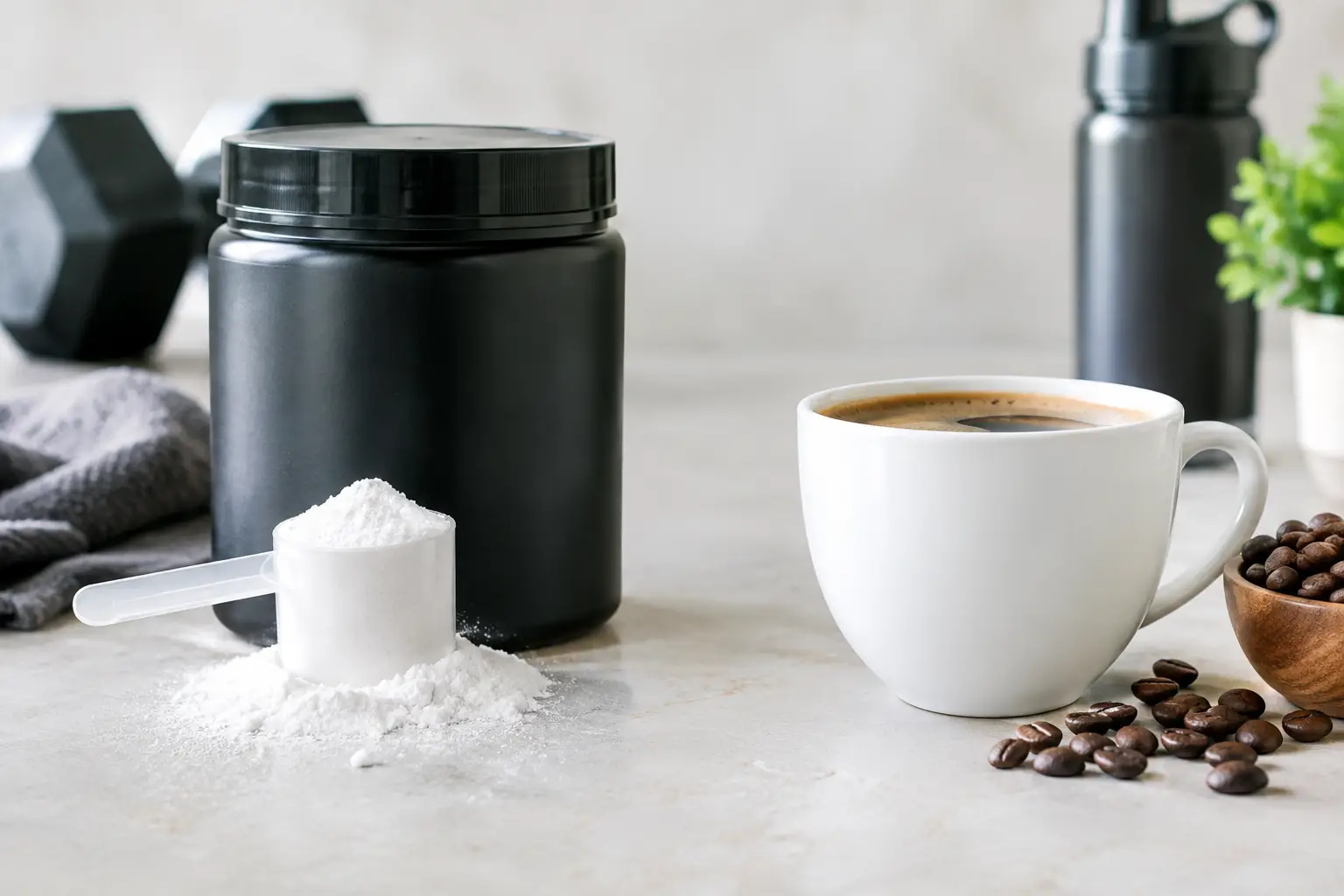

The 3 p.m. slump can make another coffee feel like the obvious answer. But if you are also trying to exercise consistently, preserve muscle, or feel less dependent on stimulants, the choice is not as simple as reaching for caffeine. Creatine versus caffeine is not really a contest between two versions of the same supplement. They work through entirely different pathways, on different timelines, and can serve different goals.
Caffeine is a fast-acting stimulant that can sharpen alertness and make a workout feel more doable. Creatine supports the energy system inside muscle cells, with benefits that build over days and weeks. Understanding that distinction can help you choose a routine that supports your energy without turning coffee into a substitute for sleep, food, or recovery.
Creatine Versus Caffeine: The Core Difference
Caffeine primarily changes how awake and alert you feel. It blocks adenosine, a brain chemical that contributes to sleepiness, which is why a cup of coffee can make a slow morning or pre-workout session feel more energized within 15 to 60 minutes. It can also improve focus, reaction time, and exercise performance for many people.
Creatine does not create a noticeable buzz. Your body naturally makes creatine, and you also get some from animal foods such as meat and fish. Supplemental creatine increases phosphocreatine stores in your muscles. Those stores help rapidly regenerate ATP, a molecule your cells use for immediate energy during high-intensity efforts like lifting, sprinting, climbing stairs, or getting up from a chair.
That means creatine is best known for supporting strength, power, training volume, and muscle maintenance. It may also support cognitive performance in certain situations, including periods of poor sleep or high mental demand, but it is not a replacement for caffeine when you need rapid alertness.
A useful way to think about the comparison: caffeine can change your perceived energy today. Creatine can improve your capacity to produce energy during demanding physical work over time.
When Caffeine May Be the Better Choice
Caffeine has a clear place in a health-conscious routine when used intentionally. If you have an early meeting after a poor night of sleep, need to drive a long distance, or want a performance lift before a hard workout, a moderate amount can be helpful.
For exercise, caffeine may improve endurance, reduce the feeling of effort, and help some people train with more intensity. It is especially useful for a morning runner who feels sluggish before a workout or a shift worker trying to stay alert during a carefully managed schedule.
The trade-off is that caffeine borrows from your body’s natural alertness signals. Too much, or too late in the day, can increase jitteriness, anxiety, heart palpitations, digestive discomfort, and sleep disruption. A late-afternoon energy drink can solve an immediate fatigue problem while quietly creating tomorrow’s fatigue problem.
Dose matters. Many adults do well with a small to moderate amount, such as coffee or tea in the morning. More is not automatically better. The FDA cites 400 milligrams of caffeine per day as an amount not generally associated with negative effects for most healthy adults, but individual tolerance varies widely. People who are pregnant, managing anxiety, taking certain medications, or living with heart rhythm concerns should get personalized advice from a clinician.
When Creatine May Be the Better Choice
Creatine is a stronger fit if your goal is to build or preserve physical capacity rather than simply feel stimulated. It is one of the most studied sports supplements, and creatine monohydrate remains the form with the deepest evidence and usually the best value.
For adults who strength train, creatine can support progress in the gym by helping them perform repeated, high-effort work. That might mean an extra rep, a slightly stronger final set, or more consistent training across weeks. Those small gains can add up.
Creatine also deserves attention beyond bodybuilding. Adults over 50 naturally face gradual losses in muscle mass and strength, particularly when activity levels drop. Combined with resistance training, adequate protein, and overall nourishment, creatine may be a practical tool for supporting muscle function and independence. It is not a shortcut, but it can make a well-designed routine more productive.
Most people do not need a loading phase. A simple daily dose of 3 to 5 grams of creatine monohydrate is enough to gradually raise muscle stores. Timing is far less important than consistency. Take it with breakfast, after a workout, or whenever you are most likely to remember it.
Some people see a small increase on the scale when starting creatine. This is typically water being held inside muscle cells, not body fat. For many active people, that is a normal part of how creatine works. If unexpected weight changes are distressing or you have a medical condition affecting fluid balance, discuss supplementation with a healthcare professional first.
Can You Take Creatine and Caffeine Together?
Yes. For most healthy adults, creatine and caffeine can be used in the same overall routine. The old concern that caffeine completely cancels out creatine’s benefits has not held up well in real-world research. Some studies have raised questions about whether large doses of caffeine taken at the same time may affect certain creatine-related performance outcomes, but the evidence is mixed.
Practically speaking, you do not need to overcomplicate it. Take creatine daily, and use caffeine according to your tolerance and schedule. If your stomach feels unsettled when you combine coffee with creatine, separate them by a few hours or take creatine with a meal. If caffeine makes you shaky, sleep-deprived, or anxious, adding creatine will not fix that underlying mismatch.
Be careful with multi-ingredient pre-workout powders. A product may include creatine, but it may also deliver a large caffeine dose along with sweeteners, stimulants, or proprietary blends that make it hard to know exactly what you are taking. Reading the Supplement Facts panel is a simple form of self-protection. A plain creatine monohydrate product and a clearly measured coffee or tea often give you more control.
Choose Based on the Problem You Are Trying to Solve
The best choice starts with an honest look at your goal. If you want help feeling alert for a specific task, caffeine may be useful. If you want better support for strength, sprint-style exercise, muscle retention, or long-term training progress, creatine is the more relevant tool.
If you are exhausted every afternoon, neither supplement should be your first question. Look at sleep duration, meal timing, hydration, alcohol intake, stress, iron status, medication effects, and whether lunch is heavy in refined carbohydrates but light in protein and fiber. Persistent fatigue, shortness of breath, dizziness, or sudden changes in energy deserve medical attention rather than more stimulants.
For many people, a balanced routine looks simple: morning caffeine if it agrees with you, daily creatine if it matches your fitness goals, regular strength training, protein-rich meals, and a firm caffeine cutoff early enough to protect sleep. The exact cutoff varies, but people who are sensitive may need to stop by late morning or early afternoon.
A Lower-Stimulant Energy Strategy
Caffeine can be enjoyable and useful, but it should not carry your entire energy system. Before increasing your dose, try eating a breakfast with protein and fiber, taking a brief walk outdoors, drinking water, and building a more predictable sleep schedule. These habits are less dramatic than an extra espresso, yet they address the foundations that supplements cannot replace.
Creatine is similarly most valuable when it supports a larger plan. Pair it with progressive resistance exercise, adequate calories, and recovery. If your goal is healthy aging, focus on the abilities that matter outside the gym too: carrying groceries, rising from the floor, climbing stairs, and staying confident in your body.
Your best energy routine may include coffee, creatine, both, or neither. Choose caffeine for a measured, short-term lift. Choose creatine for steady support of high-demand muscle work. Then give the basics of sleep, nourishing food, and regular movement the central role they deserve.