
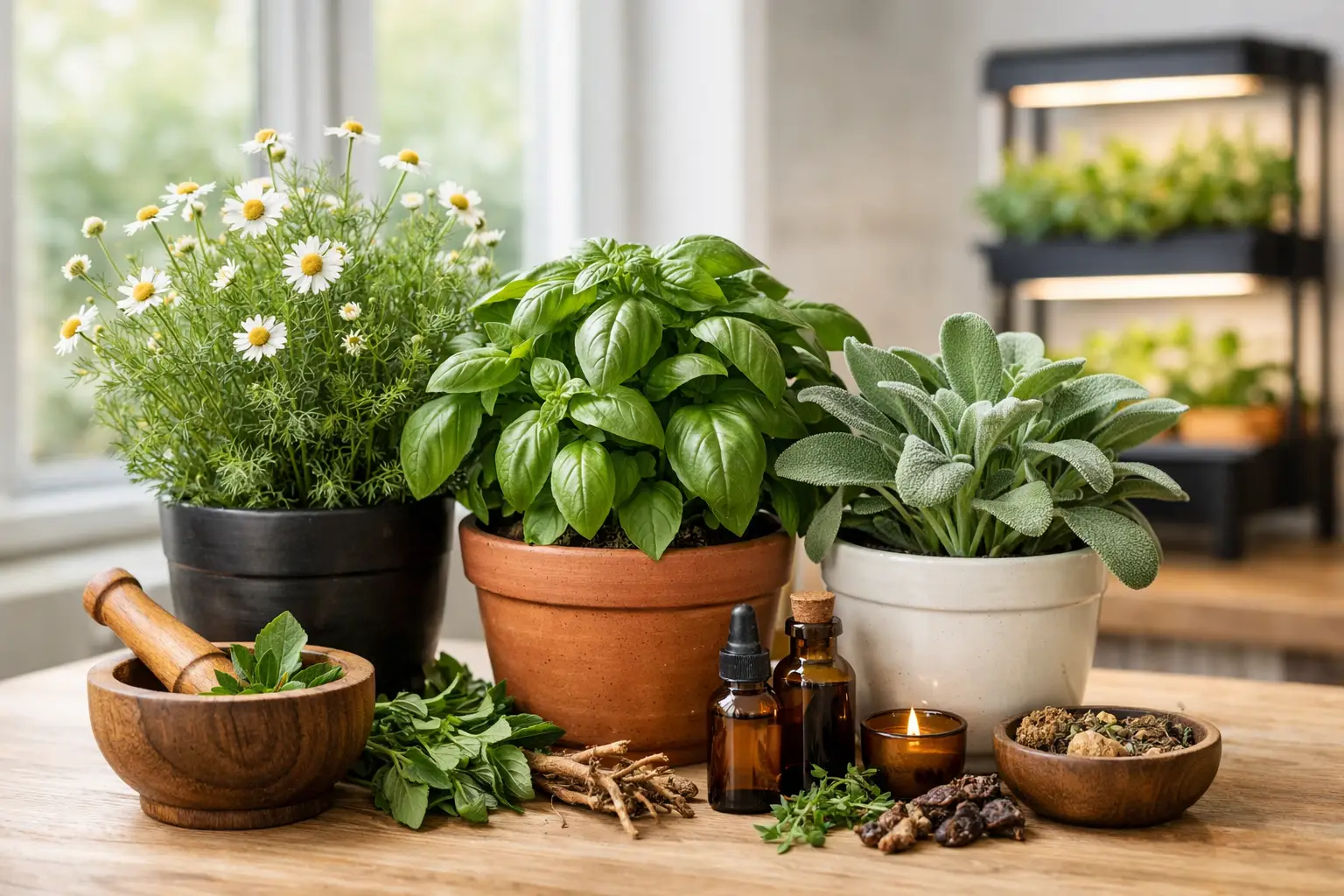

A windowsill pot of mint can be more than a pleasant kitchen detail. It can give you fresh leaves for tea when your stomach feels unsettled, brighten a homemade meal, and make a daily wellness routine feel a little more grounded. Learning how to grow medicinal herbs indoors is about having carefully grown, correctly identified herbs within reach for simple, traditional uses.
The best indoor herb gardens are small, intentional and realistic about light. Start with two or three plants you will actually use, then build from there as you learn what your home can support.
Start With Herbs That Match Your Space and Routine
Not every medicinal herb is happy in a pot beside a window. Some need intense sun, some spread aggressively, and others prefer steady moisture. For beginners, choose herbs with familiar uses and manageable indoor habits.
If you are interested in growing more than just a few culinary herbs, starting with a thoughtfully selected collection of medicinal plants can make the process easier. The Medicinal Garden Kit by Dr. Nicole Apelian is designed for people who want to grow traditional medicinal herbs at home and includes seeds for 10 different plants, including echinacea. Having several varieties available gives you an opportunity to discover which herbs grow best in your particular environment while gradually building your own home medicinal garden.
Mint is one of the easiest choices. Peppermint and spearmint grow well in bright indirect light or a sunny window, and fresh leaves are commonly used in tea or cooking. Keep mint in its own pot because its roots spread quickly and can crowd out other plants.
Lemon balm is another forgiving option with a gentle lemon scent. it’s often brewed as a calming evening tea and generally adapts well to containers, although it still needs good light to stay full and leafy. Chamomile can be rewarding, but it is a little less dependable indoors because it needs strong light and room to grow.
For a sunny spot, consider thyme, sage, rosemary, or calendula. Thyme and sage are useful culinary herbs with long histories of traditional wellness use. Rosemary prefers bright conditions and drier soil, while calendula is typically grown for its cheerful edible flowers. Aloe vera is worth considering, too, especially if you have a warm, bright location. Its clear inner gel is commonly used topically for minor skin irritation, but the yellow latex layer under the leaf skin should not be eaten.
If your primary goal is tea, mint, lemon balm, and chamomile make sense. If you cook often, thyme, sage, and rosemary may be more useful. The right plant is the one you can always keep healthy and use safely.
How to Grow Medicinal Herbs Indoors With Enough Light
Light is usually the make-or-break factor. A bright room is not always bright enough for herbs, especially in winter or in apartments where nearby buildings block direct sun.
Most leafy herbs do well with about six hours of strong light each day. A south-facing window is often the best option in US homes. East or west facing windows can work well for mint and lemon balm, while rosemary, thyme, sage, and calendula usually need more direct sun to avoid becoming thin and weak.
Watch the plants rather than relying only on window direction. Long stems with wide gaps between leaves, pale growth, and a plant that leans hard toward the glass are signs it needs more light. If that sounds familiar, a simple full-spectrum LED grow light can make indoor growing much more reliable. Position it close enough to be effective, following the manufacturer’s instructions, and use a timer so plants receive a consistent day-night rhythm.
Too much heat can also cause trouble. Keep foliage from touching cold winter glass, and avoid placing pots directly above a radiator or beside a blasting HVAC vent. Herbs prefer consistency more than extremes.
Use Pots and Soil That Let Roots Breathe
A decorative container without drainage is a common reason indoor herbs fail. Excess water has nowhere to go, roots sit in soggy soil, and the plant begins to yellow even though you are watering faithfully.
Choose a pot with at least one drainage hole and a saucer underneath. Terracotta dries out faster and works especially well for Mediterranean herbs such as rosemary, thyme, and sage. Glazed ceramic or plastic retains moisture longer, which may suit mint and lemon balm. Either option can work if you adjust your watering habits.
Use a quality indoor potting mix rather than soil from the yard. Garden soil compacts in containers and can bring in pests or weed seeds. For herbs that like drier roots, mix in a little perlite or coarse sand to improve drainage. Avoid overcomplicating this step: clean potting mix, drainage, and the right watering schedule will take you far.
Give each herb enough room. A small starter plant may look lonely in a 6-inch pot, but it will be easier to manage than several crowded plants competing for water and nutrients. Mint deserves an 8-inch pot or larger if you want it to produce generously.
Water by Checking the Soil, Not the Calendar
Indoor herbs do not follow a fixed watering schedule. A plant near a sunny window may dry out twice as fast as one under lower light. Seasonal heating, air conditioning, pot material, and plant size all change the equation.
Press a finger about an inch into the soil. If it feels dry, water slowly until a little water drains into the saucer, then empty the saucer after a few minutes. If it still feels moist, wait. This simple check prevents both underwatering and the much more common problem of overwatering.
Mint and lemon balm prefer evenly moist soil but should not stay waterlogged. Thyme, rosemary, and sage need the top layer to dry more thoroughly between waterings. Yellowing leaves and a musty smell often point to overly wet soil. Crisp, drooping leaves usually mean the plant has gone too long without water.
Feed lightly. During active spring and summer growth, a diluted organic liquid fertilizer every four to six weeks is usually plenty. Too much fertilizer can produce fast, soft growth with less fragrance and flavor. In lower-light winter conditions, most herbs need little to no feeding.
Harvest Often, but Never Strip the Plant
Harvesting is not just the payoff. Regular, careful trimming encourages many herbs to branch and become bushier.
For mint, lemon balm, thyme, and sage, pinch or snip stems just above a set of leaves. This tells the plant to send out new side shoots. Avoid taking more than about one-third of the plant at once, particularly when it is young or recovering from a move.
Harvest in the morning after any surface moisture has dried. The leaves often have their best aroma then. Rinse them gently before using, even if they were grown indoors, because dust, pet hair, and household residues can settle on foliage.
Fresh leaves are excellent for tea, cooking, infused water, or simple topical preparations where appropriate. To dry herbs, spread clean leaves in a single layer in a dark, well-ventilated spot until fully crisp, then store them in a labeled airtight container away from heat and sunlight. Labeling matters more than it seems. You should always know exactly what you are using and when you harvested it.
Keep Your Indoor Herb Garden Clean and Safe
Because these plants may end up in your cup or on your plate, avoid at all cost broad-spectrum pesticides and harsh leaf sprays. Check the undersides of leaves weekly for aphids, spider mites, or sticky residue. Isolating a new plant for a week or two before placing it beside your established herbs can prevent a pest problem from spreading.
If pests appear, remove damaged leaves, rinse the plant with a gentle stream of water, and improve airflow. For a persistent infestation, use a treatment specifically labeled for edible plants and follow the label precisely. Do not assume that “natural” means safe to ingest.
Correct identification is equally important. Buy seeds or plants from a reputable source, keep the original label, and do not consume a plant you cannot identify with confidence. This matters especially with herbs sold under broad common names, which can refer to different species.
Traditional herbal use also has limits. A soothing cup of peppermint tea may fit well into a wellness routine, but herbs can still trigger allergies or interact with medications. Speak with a pharmacist or clinician before using medicinal herbs regularly if you are pregnant, breastfeeding, managing a chronic condition, taking prescription drugs or preparing herbs for a child.
A Simple Way to Start Your Medicinal Garden
If the idea of growing medicinal herbs appeals to you but you are not sure which plants to start with, you do not necessarily have to assemble your seed collection one packet at a time. The Medicinal Garden Kit by Dr. Nicole Apelian offers a convenient starting point for building a home medicinal garden, with seeds for 10 traditional medicinal plants, including echinacea, along with a guide designed to help you learn how to grow and work with your plants.
What makes a kit like this particularly useful for beginners is the variety. Instead of committing your entire garden to one herb, you can experiment with several plants and learn which ones thrive in your available light, space, and growing conditions. Over time, that experience can become more valuable than simply keeping a few pots alive; you begin to understand the plants you grow and how they fit into your everyday routine.
Explore the Medicinal Garden Kit by Dr. Nicole Apelian
Whether you start with two pots on a windowsill or eventually create a much larger medicinal garden, growing your own herbs can be a rewarding way to become more connected to the plants you use. You get to see where they come from, control how they are grown, and develop practical skills that can last for years.
Let the Garden Become a Small Daily Ritual
An indoor medicinal herb garden will not look perfect every week. Leaves will occasionally yellow, a rosemary plant may object to a dim winter window, and you may discover that one sunny ledge supports mint far better than chamomile, that is normal.
Start small enough to pay attention. Notice how quickly the soil dries, how the scent changes after pruning, and which herbs genuinely become part of your meals or evening routine. With a little observation, those few pots can become a practical, calming reminder that everyday wellness often starts with the habits you can tend right at home. And if you discover that you enjoy growing medicinal herbs, those first few pots may be the beginning of a much larger home garden.
Thank you for reading! See you in our next article, let us know if you have any questions.