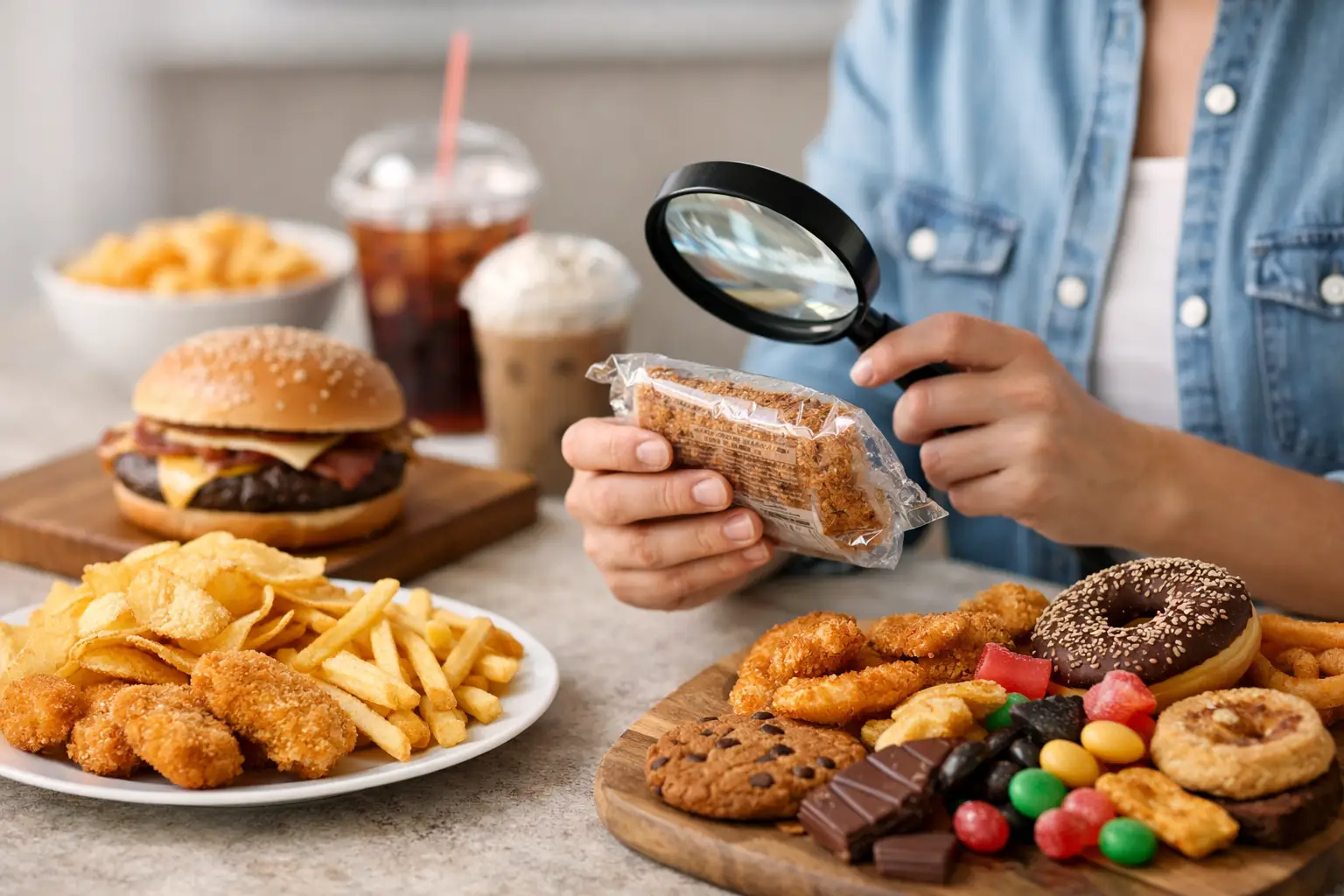
A yogurt cup that says “high protein,” a whole-grain cereal, a frozen veggie burger, and a bag of chips can all look like reasonable grocery choices. But learning how to identify ultra processed foods helps you see beyond the front label and make decisions based on what the food actually is – not just the health message printed on the package.
This is not about treating every packaged food as a problem or trying to cook every meal from scratch, most people need convenient options sometimes. The useful goal is to recognize which foods are built mostly from recognizable ingredients and which are industrial formulations designed to be intensely tasty, shelf-stable, and easy to overeat.
What makes a food ultra-processed?
Ultra-processed foods are more than foods that have been cooked, canned, frozen, or packaged. Processing exists on a spectrum. Washing bagged spinach, freezing berries, pasteurizing milk, making plain yogurt, or canning beans are all forms of processing. Those foods can still be valuable parts of a nourishing diet.
Ultra-processed foods, often called UPFs, generally contain ingredients you would not normally use in a home kitchen. Think isolated starches, refined oils, protein concentrates, flavor systems, colors, emulsifiers, artificial sweeteners and additives designed to create a specific texture or extend shelf life. The food may start with corn, milk, potatoes, meat or wheat, but the finished product is often far removed from those original ingredients.
Nutrition researchers commonly use the NOVA classification system to describe this category. It is helpful, but it is not perfect. Food does not become harmful because of one unfamiliar ingredient, and a food can be minimally processed without being nutritionally ideal. The bigger question is what the product contributes to your usual eating pattern.
How to identify ultra processed foods on a label
Turn the package over. The nutrition facts panel matters, but the ingredient list often tells a clearer story.
A short list of foods you recognize is usually a reassuring sign. For example, canned tomatoes may contain tomatoes, tomato juice, salt, and citric acid. Whole-grain bread might include whole-wheat flour, water, yeast, salt, and a little oil. Those items are processed, yet they remain close to familiar foods.
With ultra-processed products, the list often reads more like a formula. You may see several types of sugar, modified starches, gums, emulsifiers, natural or artificial flavors, color additives, preservatives, and ingredients that sound extracted rather than cooked. No single item proves a food is ultra-processed. It is the overall pattern that matters.
Look for these common clues:
- Ingredients such as high-fructose corn syrup, maltodextrin, modified food starch, hydrogenated oils, or protein isolates
- Flavor-building language, including “natural flavors,” “artificial flavors,” flavor enhancers, or smoke flavor
- Texture modifiers such as gums, emulsifiers, carrageenan or cellulose gel
- A long ingredient list with multiple components you would not buy to make a similar food at home
Some ingredient names are technical but harmless. Ascorbic acid is vitamin C for example, and citric acid is widely used to control acidity. Avoid turning label reading into a chemistry test. Instead, ask whether the product looks like a food with a few practical additions or a highly engineered product assembled from many refined components.
The front of the package can distract you
Words like organic, gluten-free, plant-based, keto-friendly, multigrain, natural or the classic “made with real fruit” don’t tell you whether a food is ultra-processed. They may describe one feature of a product while leaving out the bigger picture.
A fruit snack can contain a little fruit concentrate while still being mostly sugar, starch, flavoring and color. A plant-based snack may be dairy-free but still depend on refined oils, starches and flavor additives. Even protein bars can range from a simple blend of nuts and dates to a candy-bar-like formula with multiple sweeteners and coatings.
This does not mean those foods are forbidden, it means the marketing claim should not end the conversation. Read the ingredients, then decide whether it fits the role you want it to play.
A quick test: could you make a version of it at home?
You do not need to literally make every food yourself, this is simply a useful mental shortcut. Could you imagine making a basic version from ingredients found in a normal grocery store kitchen?
Oatmeal with nuts, dried fruit, and cinnamon? Yes. A flavored instant oatmeal packet with several sweeteners, powdered oils, artificial flavor, and thickeners? That is more likely to be ultra-processed.
Hummus made with chickpeas, tahini, olive oil, lemon, and salt is a processed convenience food that stays close to its original ingredients. Cheese-flavored crackers made from refined flour, vegetable oils, starch, flavor powders and color additives are a different kind of product altogether.
The test has limits. Store-bought whole-grain bread or unsweetened soy milk may include a few additives for freshness or texture and can still be a practical choice. The point is not purity. It is recognizing when a product is primarily a convenient version of food versus a highly formulated edible product.
Watch for foods built to be hard to stop eating
Ultra-processed foods are often designed around a rewarding combination of refined carbohydrates, added fat, salt, sweetness, and bold flavor. That can make them especially easy to keep eating past the point of hunger. Think of chips, cookies, sweetened cereals, soda, frozen pizza, candy, and many packaged snack foods.
Pay attention to your own experience. Do you finish the serving and still feel unsatisfied? Does the food disappear quickly but leave you hungry an hour later? Is it easy to eat straight from the bag while scrolling or driving? These are not failures of willpower. They are useful signals about how the food is working in your routine.
For people managing afternoon energy crashes, frequent cravings, or a tendency to snack late at night, reducing these foods may be more helpful than chasing the latest supplement. A meal with protein, fiber-rich carbohydrates, healthy fats, and produce is generally more likely to provide steady energy and lasting fullness.
Focus on your usual pattern, not one imperfect choice
The healthiest approach is rarely all or nothing. A frozen meal during a busy week, a packaged protein shake after a workout, or a favorite dessert at a celebration can have a place in real life. Stressing over every additive can create more food anxiety than benefit.
Start by noticing the products you eat most often. If sweetened drinks, snack bars, packaged pastries, instant noodles, or drive-thru meals show up daily, that is where small changes can make a meaningful difference. Replace one routine item at a time rather than trying to rebuild your entire pantry overnight.
For example, you might trade a sugary breakfast cereal for oats topped with fruit and nut butter, or just eggs with bacon and avocado a few mornings each week. You could keep convenient snacks on hand, but choose options such as fruit, plain Greek yogurt, roasted chickpeas, cheese, nuts, or popcorn with simple ingredients. Frozen vegetables, canned beans, rotisserie chicken, and bagged salad kits can also reduce cooking time without relying entirely on ultra-processed meals.
Cost and access matter too. Fresh food is not the only answer, and expensive wellness products are not required. Budget-friendly staples such as oats, eggs, peanut butter, lentils, canned fish, potatoes, frozen produce, and plain yogurt can make everyday eating more satisfying and less dependent on heavily formulated foods.
Use labels to make more informed choices, not fearful ones
When you know how to identify ultra processed foods, grocery shopping becomes less about chasing perfect ingredients and more about building a pattern that supports your energy, digestion, fitness goals, and long-term health. Keep a few convenient foods you genuinely enjoy, but make room for more meals that still look and feel like food.
Your next smart step can be simple: choose one item you buy every week, read its ingredient list without judgment, and see whether there is a less processed option you would actually enjoy eating.